Showing posts with label weight loss. Show all posts

Tuesday, November 19, 2019

I Stopped Eating 3 Hours Before Bed, and Here's How It's Completely Changed My Life


Summer was amazing because of . . . food! Aside from all the fresh veggies in my garden, I was enjoying lots of neighborhood barbecues, goodies at the farmers market, late-night trips to the local ice cream shop, and s'mores by the campfire. I got in the habit of eating past 9 p.m., right before I got into bed. Before the Summer, I rarely ate past 7 p.m., so it was a big difference.
Eating more foods I wasn't used to and eating up until I went to bed added a little extra Summer fluff, but what I really noticed was that I was sleeping like crap. Eating so close to bedtime left me feeling bloated, and I'd often wake up several times a night because of stomach pains.

What Doctors Say About Sleep and Eating

Dr. Rizwana Sultana, MD, said "the last big meal of the day should be at least two to three hours before going to bed." Before the Summer, I practiced intermittent fasting, eating from noon or 1 p.m. until 7 p.m. and was in bed by 9 p.m.

What I Did

In the Summer, I became more relaxed with my intermittent fasting schedule. I was used to eating in a six- or seven-hour window during the school year, but once I started eating later during the Summer, I was actually doing 15:9 and eating from noon until 9 p.m. Something needed to change because I was feeling terrible and not like myself.
I thought I'd do a little experiment and see what would happen if I stopped eating three hours before bed, as recommended by Dr. Sultana. Since I go to CrossFit, run, or do yoga early in the morning, I'm in bed by 9 p.m., which meant I needed to stop eating by 6 p.m. every night. I did this for the entire month of September.
I also went back to eating in a six- or seven-hour window, since that's the IF schedule I preferred. I'd eat lunch around noon, have a snack around 3 p.m., and finish dinner by 6 p.m. It was a little hard at first to have that 6 p.m. cutoff, but it made me realize how much I was unnecessarily eating after dinner while cleaning the kitchen and making the kids' lunches. Sometimes my workouts were so intense that I'd be hungry before noon so I'd eat at 11 a.m., but I was strict about that 6 p.m. cutoff.

Did Not Eating Three Hours Before Bed Help Me Sleep Better?

Yes! After that very first day, I had the most rested night of sleep I had had in months. I forgot how amazing it feels to get a full night of good sleep. After that first week, I was dealing with hardly any pain or tummy issues while sleeping, and I also woke up with less bloat.

Did Not Eating Three Hours Before Bed Affect My Morning Workouts?

Getting a good night's sleep also helped me perform better during my morning workouts. I obviously had more energy (duh!), but I also noticed that I felt more confident and happy. When your stomach bothers you throughout the night and you wake up bloated, you don't really feel 100 percent. I felt like a different person this past month!

Did Not Eating Three Hours Before Bed Affect What I Ate?

What you eat before bed can definitely affect how you sleep, explained Mattress Firm's sleep health expert, Dr. Sujay Kansagra, MD. He said that fatty or fried foods are best to avoid late at night since these foods tend to stimulate the production of acid in the stomach, which can spill into your esophagus and cause heartburn that will disrupt your normal sleep cycle.
I found high-sugar foods had that effect on me; those were the foods I was reaching for in the Summer nights. Having that 6 p.m. cutoff naturally helped me not reach for as much crap! It helped me get back into a healthy eating pattern, not only when I was eating but also what I was eating.

Will I Stick With It?

I feel so much better eating this way that I'm naturally inspired to keep it up. During the week, this schedule feels totally easy to stick to. On the weekends I like to have a little more flexibility since I go to bed an hour or two later, which means I may extend my eating window and stop eating around 7 or 8 p.m. — it just depends on how I feel. But I still try to stop eating three hours before bed because it just makes such a huge difference in how I sleep and how I feel the next day.

sorce : popsuger
Monday, November 18, 2019

We Ask The Experts How Much Daily Fiber Is Needed to Lose Weight, the Answer Is Pretty Interesting

While getting in your veggies is a great way to keep calories low if you're trying to lose weight, they're also jam-packed with fiber. But you don't have to just eat veggies all day long in order to lose weight. We asked a dietitian, and here's what she said about how much fiber you need a day to lose weight.

Why is Fiber Good For Weight Loss?

Registered dietitian nutritionist and NASM-certified personal trainer Whitney English Tabaie, MS, said fiber slows digestion and helps you feel fuller longer, which may result in less overeating or snacking between meals, which can lead to weight loss. Fiber also slows the release of glucose into the bloodstream, which helps to maintain energy levels and prevent spikes and crashes.

How Much Fiber Should I Eat to Lose Weight?

The recommended daily amount (RDA) of fiber is 25 grams a day for women and 37 grams for men, Whitney said, but the average American probably only consumes about 15 grams of fiber per day. "I recommend people aim to consume at least the RDA, but really, when the fiber is coming from whole foods versus supplements, the more, the better. Some hunter-gatherer societies consume an upwards of 100 grams a day!" She added to just make sure to consume plenty of water to aid in fiber digestion.
Don't just start eating a ton of fiber if you haven't been! Whitney warns that a drastic increase in fiber, especially coupled with low water intake, could cause digestive distress and constipation. "My recommendation is to increase fiber intake slowly, drink plenty of water, and aim to get your fiber from whole foods versus supplements," Whitney said.

What Are the Best Sources of Fiber?


Great sources of fiber include whole grains, legumes, nuts, seeds, vegetables, and fruit. Here are some ways you can increase your fiber intake:
  • Spread toast with nut butter or avocado instead of butter.
  • Add beans to smoothies, puree into soups, and add to mashed potatoes.
  • Sprinkle hemp seeds on your salad.
  • Use a flax egg instead of a regular egg when baking.
  • Dip carrots or pepper strips in guacamole instead of chips.
  • Add chia seeds to your overnight oats.
  • Bake with whole wheat flour instead of all-purpose.
  • Explore different pasta alternatives such as chickpea pasta.
sorce : popsuger

Wednesday, June 27, 2018

After Years of Struggling, Here's How I Finally Learned to Do Push-Ups


Let me tell you about my relationship with push-ups — as in, it didn't really exist. After years and years (and years!) of working out, being able to do a set of perfect push-ups never seemed to happen for me. I can plank for a decent amount of time, deadlift a respectable barbell weight, and have run my fair share of races . . . but push-ups? Nope. And as a fitness editor, this has always felt embarrassing. This month I decided to get serious, conquer the elusive push-up, and invested in personal training.
My first session with Austin Lopez, BS, CSCS, and trainer at DIAKADI was a lesson in honesty. For years, my typical workout routine consisted of stringing together studio classes. One day I was at SoulCycle, the next day I was popping into yoga, later in the week I threw in a couple of HIIT classes. At what point, Austin asked me, was I doing focused push-up work (or even going to the same studio enough to track my progress there)? If you want to master push-ups, you need to be doing push-ups on a consistent basis — period. Even if you have a strong core, arms, chest, your body hasn't been consistently tasked with using them together in this specific movement. So we dug in, and in the process I was taught a push-up modification that trumps all others: the negative push-up.


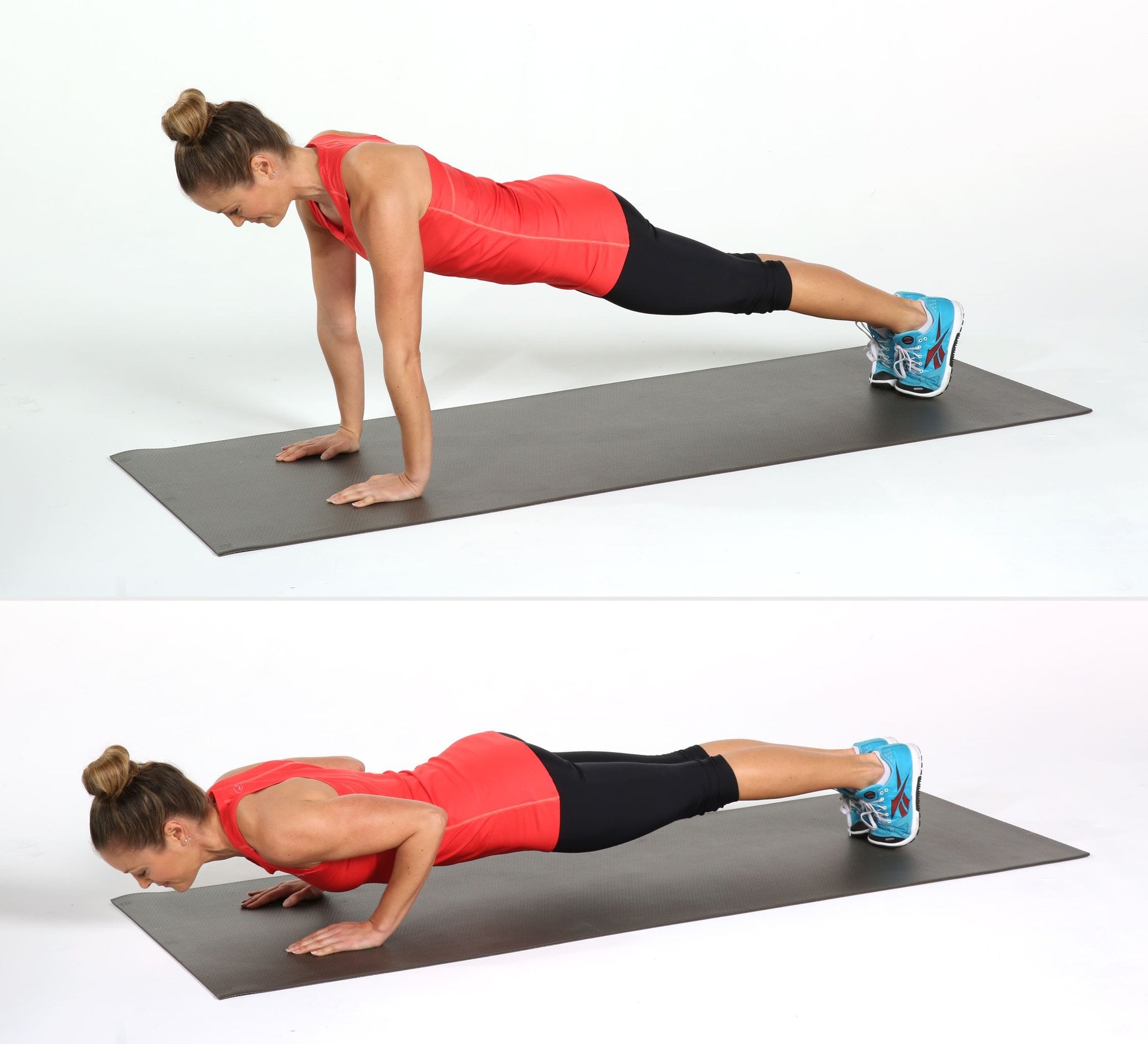
A negative push-up focuses solely on the downward (aka, eccentric) movement of the push-up. An easy way to envision the exercise is to think of it like doing one-half of a full push-up; by putting all the load on the eccentric movement, "you focus on elongating the muscle," said Austin.
Negative Push-Up How-To
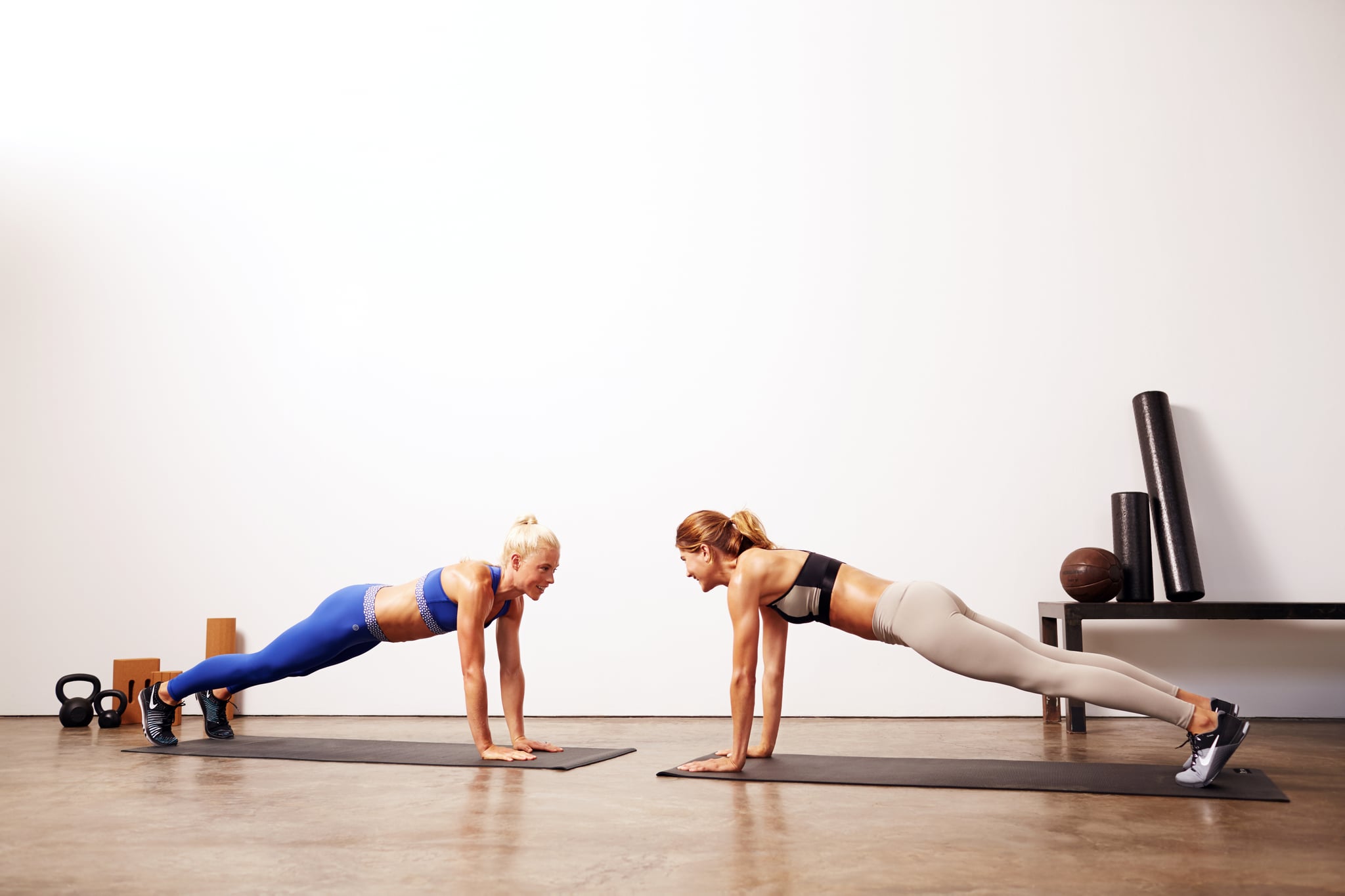
  • Start in a plank position with your arms and legs straight, shoulders above the wrists, core engaged.
  • Take a breath in, and as you exhale, slowly bend your elbows, lowering your entire body to the floor for a 6-8 second count. This counts as one rep. Note: When lowering to the ground, do your best to not collapse, making sure your entire body touches the floor at the same time. If it's too hard to maintain the exercise for 6-8 seconds, start with a 4-6 second count.
  • Perform for a total of 8 reps.
"Because of the eccentric loading, you do a lot of 'damage' to the muscle, which is good when it comes to strength," said Austin. "When the muscle rebuilds itself, it will have to increase the size of its fibers that were damaged, making them stronger and better at contracting." In layman's terms: you're gonna feel sore, and then you're gonna get swole.
Doing negative push-ups has been a total revelation for me. The modification has forced me to keep more control of my body, and has tasked my muscles to turn on and work. I've been more aware of my form, while still staying in the same movement as the conventional exercise, and I'm excited to say that I'm doing more push-ups on my toes than ever before.

An important note from Austin, trainer extraordinaire, "The most important part of this, is to make sure you don't lose form while going down [in negative push-ups], otherwise, you might as well not do them." A couple of form cues to keep in mind: be aware of your hips, and do not allow them to drop. If they do, it means "the abs are not being turned on, or are not strong enough." Also, stop shrugging your shoulders up to your ears! "Not only does this take away from the desired effect of a push-up — chest, shoulders, triceps work — it also sets your shoulders up for long-term damage. A great tip for taking the shrug out is to rotate your elbows so that the pit [inside bend] of the elbow faces forward, and engage your hands to really grip the ground.


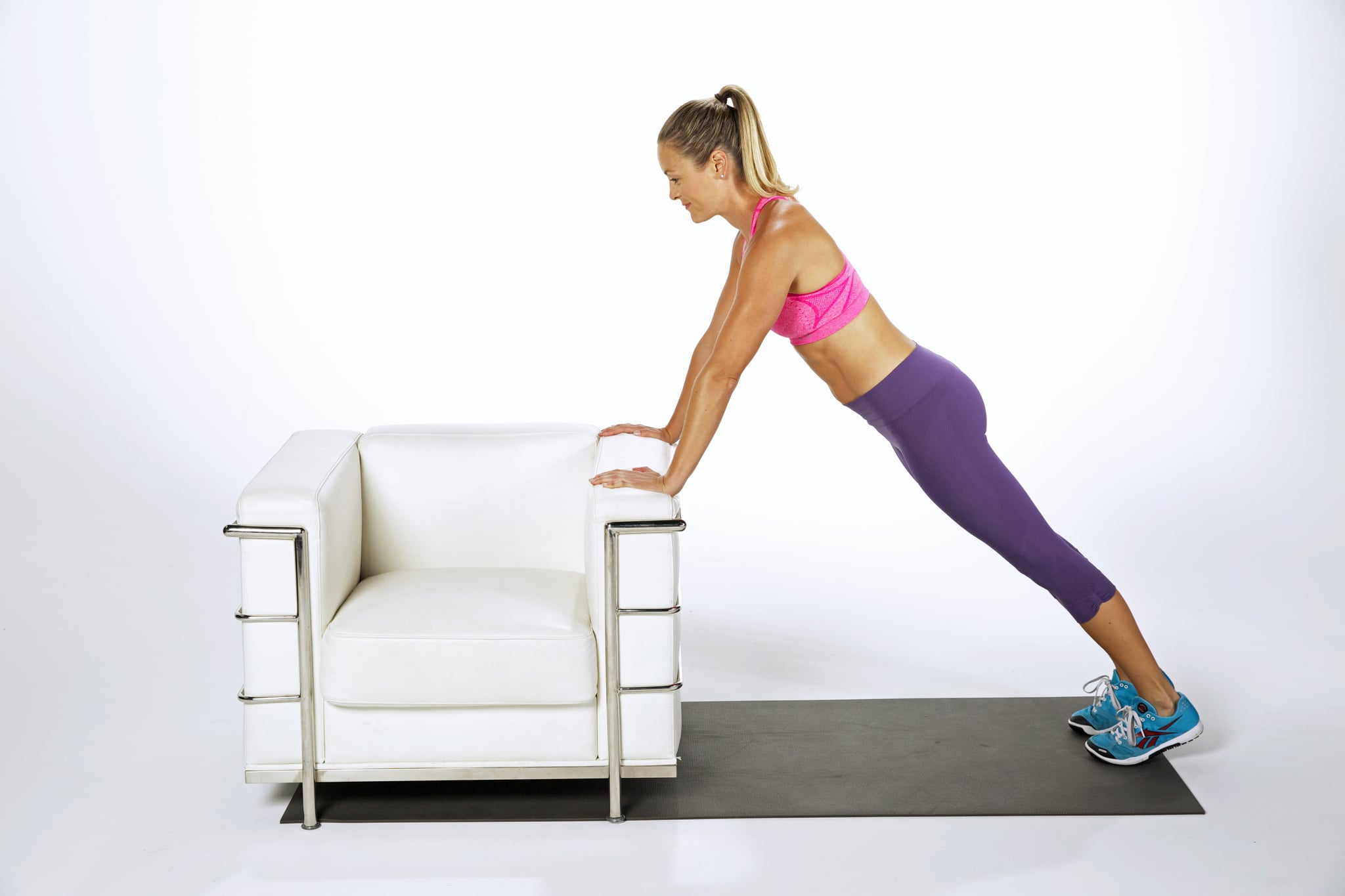
If your form is still off, try to modify by doing an incline push-up over choosing a push-up on your knees. "These are a little better at increasing your strength in the actual push-up because you are stressing your body in the way that is desired long-term," he said. As you become stronger in the move, continue to lower the angle of your push-up until you're parallel with the ground.


I Did Alternate Day Fasting and This Is What My Belly Looked Like After 3 Weeks

I sprang into Spring excited to start running more and ended up hurting my knee. I took a month-long break from running and CrossFit classes to heal and also did a bunch of traveling, so I was eating like crap. All that added up to some weight gain, and my usual 16:8 intermittent fasting (IF) schedule wasn't helping me drop those pounds. I decided to try alternate day fasting (ADF).

What Is Alternate Day Fasting?

Alternate day fasting (ADF), a form of intermittent fasting, involves fasting one day, eating the next, and repeating. If you need to, you are allowed to eat on fasting days, the recommended amount being 25 percent of your total calories. For example, if you've calculated that 1,800 calories a day is the amount you need to eat in order to lose weight, on a fasting day, you'd eat no more than 450 calories. On nonfasting days, you'd eat 1,800 calories.

Why I Tried ADF

First and foremost, I spoke with my doctor, the registered dietitian I was seeing, and even my gynecologist about how I wanted to try ADF to make sure this was safe for me. They knew I had been doing 16:8 IF for over a year, and I explained that now that I was in my 40s, I was having a hard time losing belly fat and was concerned because it's the unsafe kind of visceral fat that can lead to cancer (which is in my family).
I also spoke to them about my issue with overeating, my sugar cravings, and belly bloat and how fasting longer in the past has helped with that. After having blood tests, they all said ADF was safe as long as I felt good and energetic and had no negative side effects. We decided that once I lost the belly fat, I'd go back to 16:8 — I mean, this didn't sound fun at all, so it wouldn't be something I'd want to continue.

What I Did

To complement my workout schedule and family life, I fasted Mondays, Wednesdays, and Fridays so I could have the weekends to enjoy eating with my family. With my previous experience doing 5:2, where I ate 500 calories a day on those two fasting days, I found that eating such a small amount actually made me more hungry. So for ADF, I didn't consume any calories during the 24-hour fasting window, which was from 6 p.m until 6 p.m. the following day. I only drank water, sparkling mineral water, black coffee, and tea. My week of eating looked like this:
Monday: ate 6 p.m. to 8 p.m.
Tuesday: ate 10 a.m. to 6 p.m.
Wednesday: ate 6 p.m. to 8 p.m.
Thursday: ate 10 a.m. to 6 p.m.
Friday: ate 6 p.m. to 9 p.m.
Saturday: no restrictions
Sunday: ate 10 a.m. to 6 p.m.

As you can see, I still did 16:8 intermittent fasting on Tuesdays, Thursdays, and Sundays. I'm so used to not eating breakfast, and since I wasn't hungry on those mornings, I didn't eat. I ate very well on those nonfasting days, consuming probably 2,000 to 2,500 calories (I didn't track it), and just made sure to stop eating around 6 p.m. so I could eat dinner at 6 p.m. the next day.
On my fasting days (Mondays, Wednesdays, and Fridays), I ate a huge dinner at 6 p.m., then at around 7:45 p.m., I'd eat a mini meal of nuts and fruit, a whole avocado with sunflower seeds, or homemade fruit and nut bars smeared with nut butter (gotta have those healthy fats!). On those fasting days, I didn't really keep track but definitely ate around 1,400 calories. On Saturdays, I ate what and when I wanted.

What Surprised Me?

I wasn't super hungry on those fasting days. I thought I'd be famished and hangry, but I wasn't. I guess I was used to not eating breakfast, so on those fasting days, the only difference was that I was skipping lunch and afternoon snack. I was surprised that my hunger level always felt the same; it didn't get more intense as the day progressed. By the second and third weeks, hunger wasn't really an issue.

The Pros

I felt energized and clear-headed, I had absolutely no bloating, I slept well, and I had less cravings for sugar and other crappy food. Since I was spending less time prepping, cooking, and cleaning up after meals, I had more time to do other things — I was more productive. It sounds insane, but I found I was actually looking forward to my fasting days because I felt so good, especially on Mondays, as a way to reset after a deliciously indulgent weekend.
Eating big meals, not counting calories or carbs (or cookies!), and having no restrictions on the foods I ate during my feeding windows was so freeing. I felt satisfied physically and emotionally, and even though I had specific times to eat and fast, it didn't feel strict or hard to follow. Fasting for 24 hours also let me know what true hunger felt like, which helped prevent mindless eating on my nonfasting days.

The Cons

Not eating for 24 hours sucked at first (obviously!). I was definitely hungry by the time dinner rolled around, and I was so excited that I could sit down to eat that I ended up overeating. It only took a few times to feel full and bloated, so by the second week, this wasn't an issue.

Was I Able to Work Out?

I continued to do morning CrossFit classes or runs, and I felt great since I was fueled from dinner the night before. I was used to not eating before my workouts, so nothing felt different here. I still had tons of energy and endurance. The only times I felt crappy were if I didn't eat enough protein and healthy fats the night before, but that had nothing to do with ADF.

Did I Lose Weight?

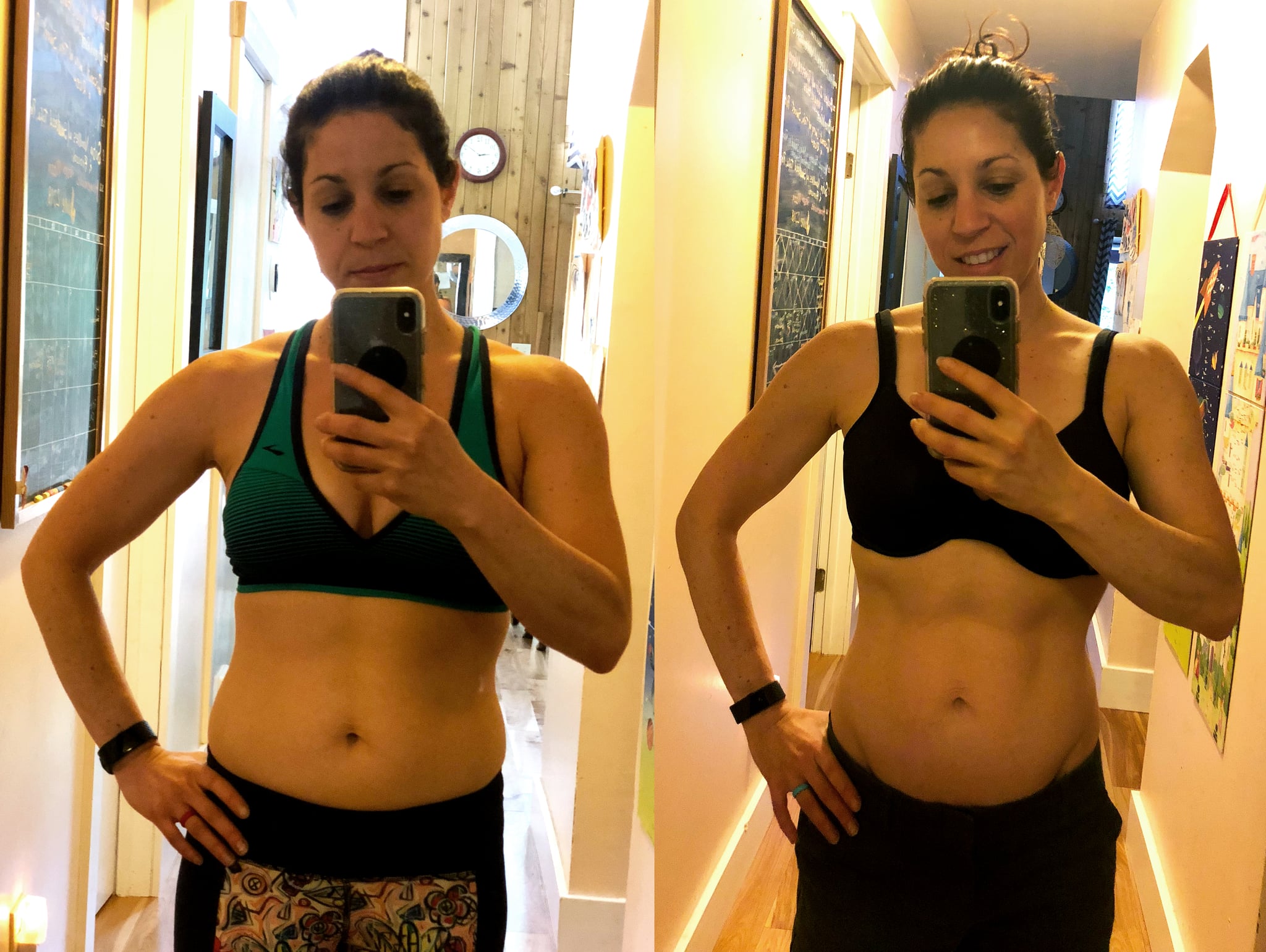
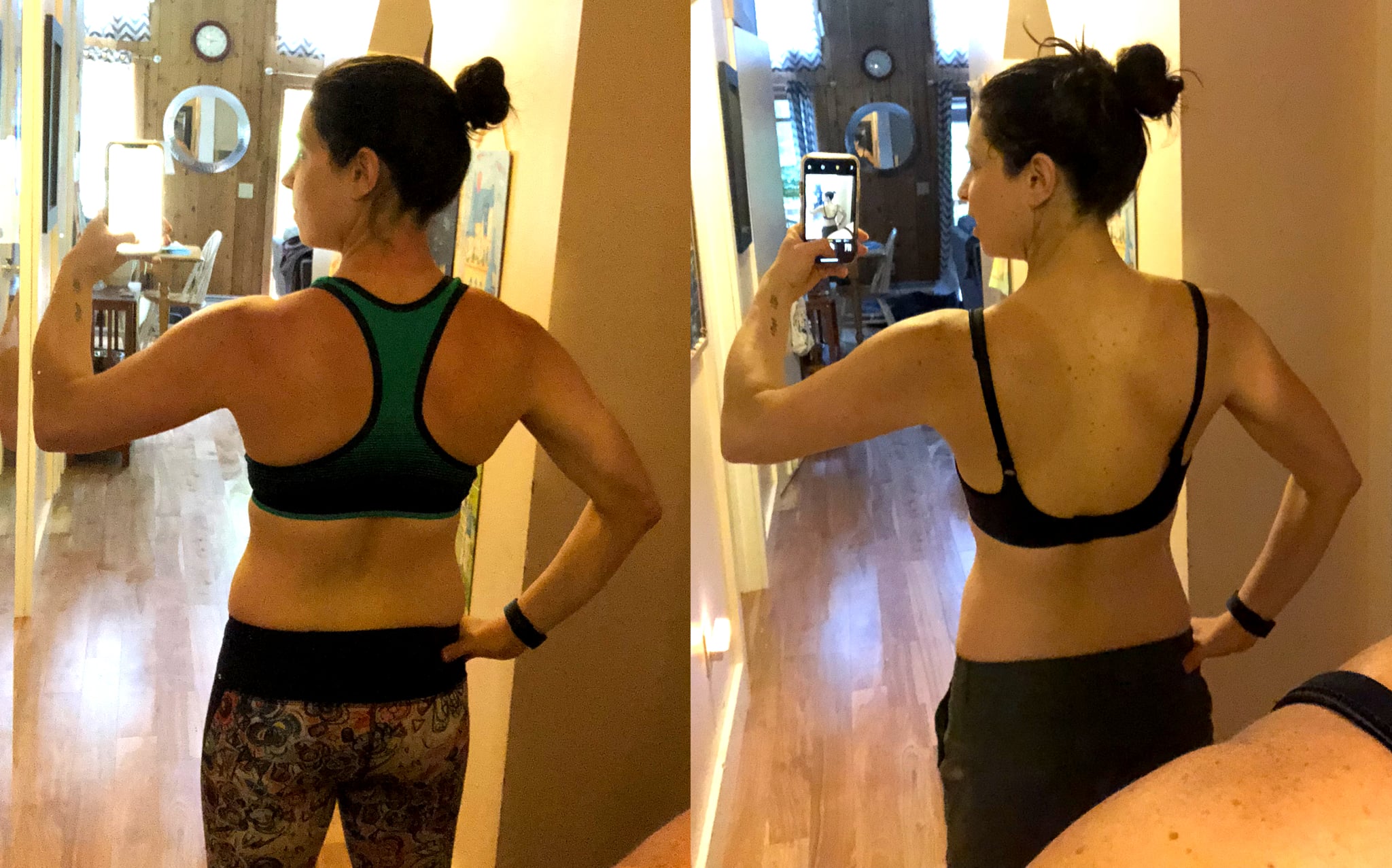
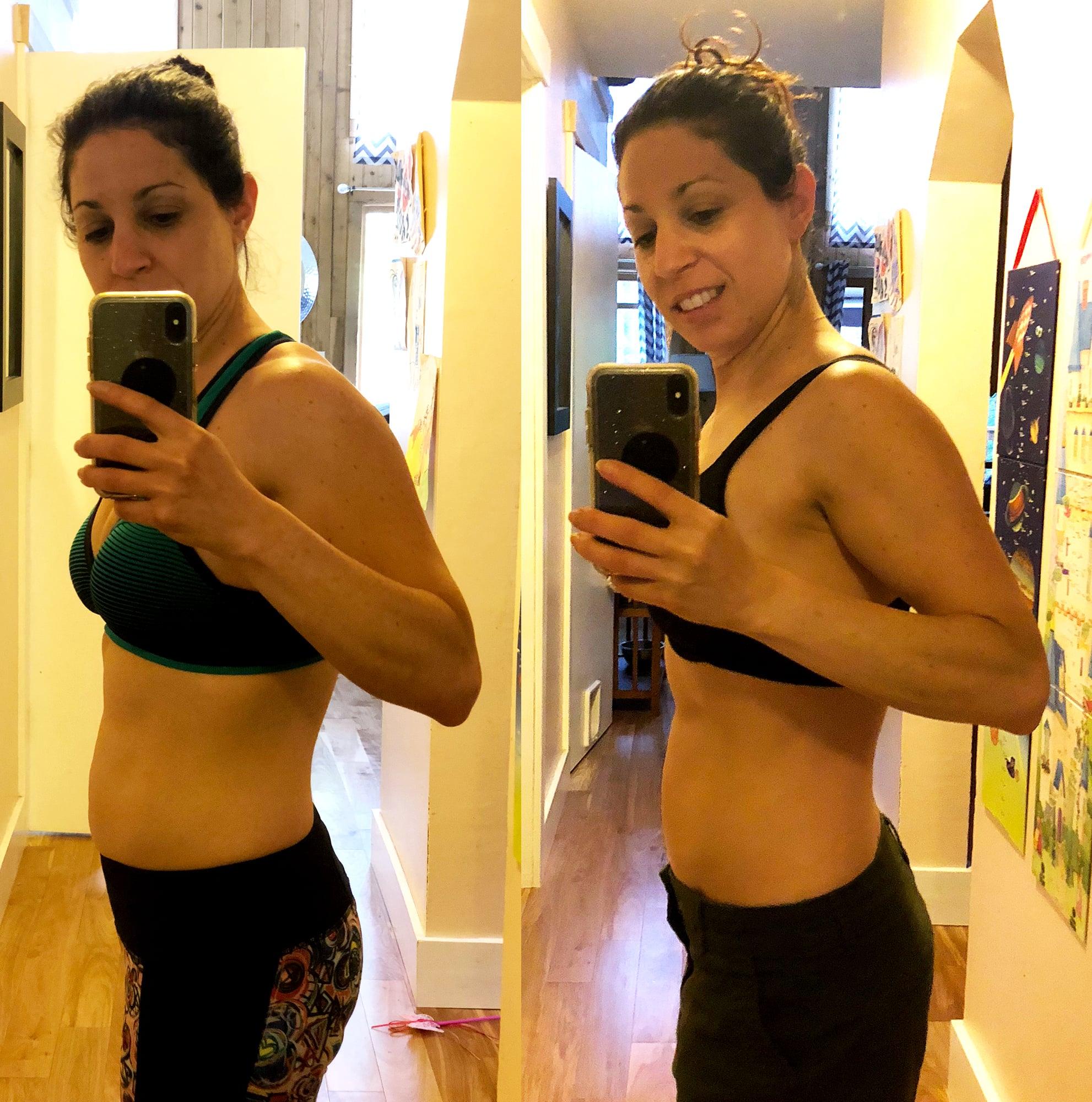
I not only saw the scale numbers drop an average of one pound a week, but I could see from the before and after photos that I definitely lost belly fat and my face looked thinner. I saw more muscle definition in my arms and upper back and just felt leaner and less puffy.

Now What?

ADF wasn't so bad! I liked how my schedule was consistent, I could still work out, I could eat every day, and I was still able to lose weight. I plan to do this for one more week, then I'll go back to 16:8 and hopefully maintain what I've accomplished.

Final Thoughts

If you're considering trying intermittent fasting, consult with your doctor and get the green light first, because IF isn't safe for everyone. If you do get the OK, start off with an easier form of IF, like fasting for 12 hours a day (7 p.m. until 7 a.m. the next morning) to allow your body to adjust. ADF is a very advanced form of IF and may not be suitable for everyone. I have been doing intermittent fasting for well over a year and built up to alternate day fasting. It's important to listen to your body and do what's right, safe, and healthy for you.

via : PopSugar

I Did Alternate Day Fasting and This Is What My Belly Looked Like After 3 Weeks

I sprang into Spring excited to start running more and ended up hurting my knee. I took a month-long break from running and CrossFit classes to heal and also did a bunch of traveling, so I was eating like crap. All that added up to some weight gain, and my usual 16:8 intermittent fasting (IF) schedule wasn't helping me drop those pounds. I decided to try alternate day fasting (ADF).

What Is Alternate Day Fasting?

Alternate day fasting (ADF), a form of intermittent fasting, involves fasting one day, eating the next, and repeating. If you need to, you are allowed to eat on fasting days, the recommended amount being 25 percent of your total calories. For example, if you've calculated that 1,800 calories a day is the amount you need to eat in order to lose weight, on a fasting day, you'd eat no more than 450 calories. On nonfasting days, you'd eat 1,800 calories.

Why I Tried ADF

First and foremost, I spoke with my doctor, the registered dietitian I was seeing, and even my gynecologist about how I wanted to try ADF to make sure this was safe for me. They knew I had been doing 16:8 IF for over a year, and I explained that now that I was in my 40s, I was having a hard time losing belly fat and was concerned because it's the unsafe kind of visceral fat that can lead to cancer (which is in my family).
I also spoke to them about my issue with overeating, my sugar cravings, and belly bloat and how fasting longer in the past has helped with that. After having blood tests, they all said ADF was safe as long as I felt good and energetic and had no negative side effects. We decided that once I lost the belly fat, I'd go back to 16:8 — I mean, this didn't sound fun at all, so it wouldn't be something I'd want to continue.

What I Did

To complement my workout schedule and family life, I fasted Mondays, Wednesdays, and Fridays so I could have the weekends to enjoy eating with my family. With my previous experience doing 5:2, where I ate 500 calories a day on those two fasting days, I found that eating such a small amount actually made me more hungry. So for ADF, I didn't consume any calories during the 24-hour fasting window, which was from 6 p.m until 6 p.m. the following day. I only drank water, sparkling mineral water, black coffee, and tea. My week of eating looked like this:
Monday: ate 6 p.m. to 8 p.m.
Tuesday: ate 10 a.m. to 6 p.m.
Wednesday: ate 6 p.m. to 8 p.m.
Thursday: ate 10 a.m. to 6 p.m.
Friday: ate 6 p.m. to 9 p.m.
Saturday: no restrictions
Sunday: ate 10 a.m. to 6 p.m.

As you can see, I still did 16:8 intermittent fasting on Tuesdays, Thursdays, and Sundays. I'm so used to not eating breakfast, and since I wasn't hungry on those mornings, I didn't eat. I ate very well on those nonfasting days, consuming probably 2,000 to 2,500 calories (I didn't track it), and just made sure to stop eating around 6 p.m. so I could eat dinner at 6 p.m. the next day.
On my fasting days (Mondays, Wednesdays, and Fridays), I ate a huge dinner at 6 p.m., then at around 7:45 p.m., I'd eat a mini meal of nuts and fruit, a whole avocado with sunflower seeds, or homemade fruit and nut bars smeared with nut butter (gotta have those healthy fats!). On those fasting days, I didn't really keep track but definitely ate around 1,400 calories. On Saturdays, I ate what and when I wanted.

What Surprised Me?

I wasn't super hungry on those fasting days. I thought I'd be famished and hangry, but I wasn't. I guess I was used to not eating breakfast, so on those fasting days, the only difference was that I was skipping lunch and afternoon snack. I was surprised that my hunger level always felt the same; it didn't get more intense as the day progressed. By the second and third weeks, hunger wasn't really an issue.

The Pros

I felt energized and clear-headed, I had absolutely no bloating, I slept well, and I had less cravings for sugar and other crappy food. Since I was spending less time prepping, cooking, and cleaning up after meals, I had more time to do other things — I was more productive. It sounds insane, but I found I was actually looking forward to my fasting days because I felt so good, especially on Mondays, as a way to reset after a deliciously indulgent weekend.
Eating big meals, not counting calories or carbs (or cookies!), and having no restrictions on the foods I ate during my feeding windows was so freeing. I felt satisfied physically and emotionally, and even though I had specific times to eat and fast, it didn't feel strict or hard to follow. Fasting for 24 hours also let me know what true hunger felt like, which helped prevent mindless eating on my nonfasting days.

The Cons

Not eating for 24 hours sucked at first (obviously!). I was definitely hungry by the time dinner rolled around, and I was so excited that I could sit down to eat that I ended up overeating. It only took a few times to feel full and bloated, so by the second week, this wasn't an issue.

Was I Able to Work Out?

I continued to do morning CrossFit classes or runs, and I felt great since I was fueled from dinner the night before. I was used to not eating before my workouts, so nothing felt different here. I still had tons of energy and endurance. The only times I felt crappy were if I didn't eat enough protein and healthy fats the night before, but that had nothing to do with ADF.

Did I Lose Weight?

I not only saw the scale numbers drop an average of one pound a week, but I could see from the before and after photos that I definitely lost belly fat and my face looked thinner. I saw more muscle definition in my arms and upper back and just felt leaner and less puffy.

Now What?

ADF wasn't so bad! I liked how my schedule was consistent, I could still work out, I could eat every day, and I was still able to lose weight. I plan to do this for one more week, then I'll go back to 16:8 and hopefully maintain what I've accomplished.

Final Thoughts

If you're considering trying intermittent fasting, consult with your doctor and get the green light first, because IF isn't safe for everyone. If you do get the OK, start off with an easier form of IF, like fasting for 12 hours a day (7 p.m. until 7 a.m. the next morning) to allow your body to adjust. ADF is a very advanced form of IF and may not be suitable for everyone. I have been doing intermittent fasting for well over a year and built up to alternate day fasting. It's important to listen to your body and do what's right, safe, and healthy for you.

via : PopSugar

Wednesday, December 6, 2017

After Years of Exercising, This Is the Workout That Changed My Body


After Years of Exercising, This Is the Workout That Changed My Body

When I started working out with a trainer a few months ago, I wasn't entirely sure what to expect, but if there's one thing I am certain of, a barbell was never part of the equation. Yet here I was, standing in front of one with my trainer off to the side asking me to do deadlifts. I was equal parts perplexed, scared, and thrilled. In all my years of working out, heavy lifting was something I had never done. Like everyone else in my life, I hopped from trendy studio to trendy studio for my workouts, and though there was a weight room at my gym, the idea of picking up a barbell on my own seemed terrifying.
I looked down at the 65-pound steel bar and then looked up at my trainer (a few times actually). With no knowledge of or prior exposure to lifting, I was also dealing with the real fear that I would possibly drop this thing, along with myself, in the process. Sensing my fear, he talked me through the steps repeatedly with the right amount of encouragement, until I grabbed the damn thing and remarkably pulled it off — "with ease and perfect form," he would later tell me. I surprised myself; I was stronger than I gave myself credit for. My trainer added weight to the bar at a quick pace, which I think even surprised him.
Looking back, I am not sure why I stayed away from heavy lifting for so many years. Sure, I wasn't exposed to it, but I also never allowed myself to even explore the idea. When I heard SoulCycle was coming to my city, I was in the very first class. When the new TRX studio moved in down the block, I couldn't wait to try it! But lifting? Nope. Despite my firm belief that women are strong AF, there was a part of me that thought of heavy lifting as a very male-dominated world, or at least the kind of world where you go when you want biceps as big as your head. And if I am being totally honest, huge 'ceps weren't what I was looking for.

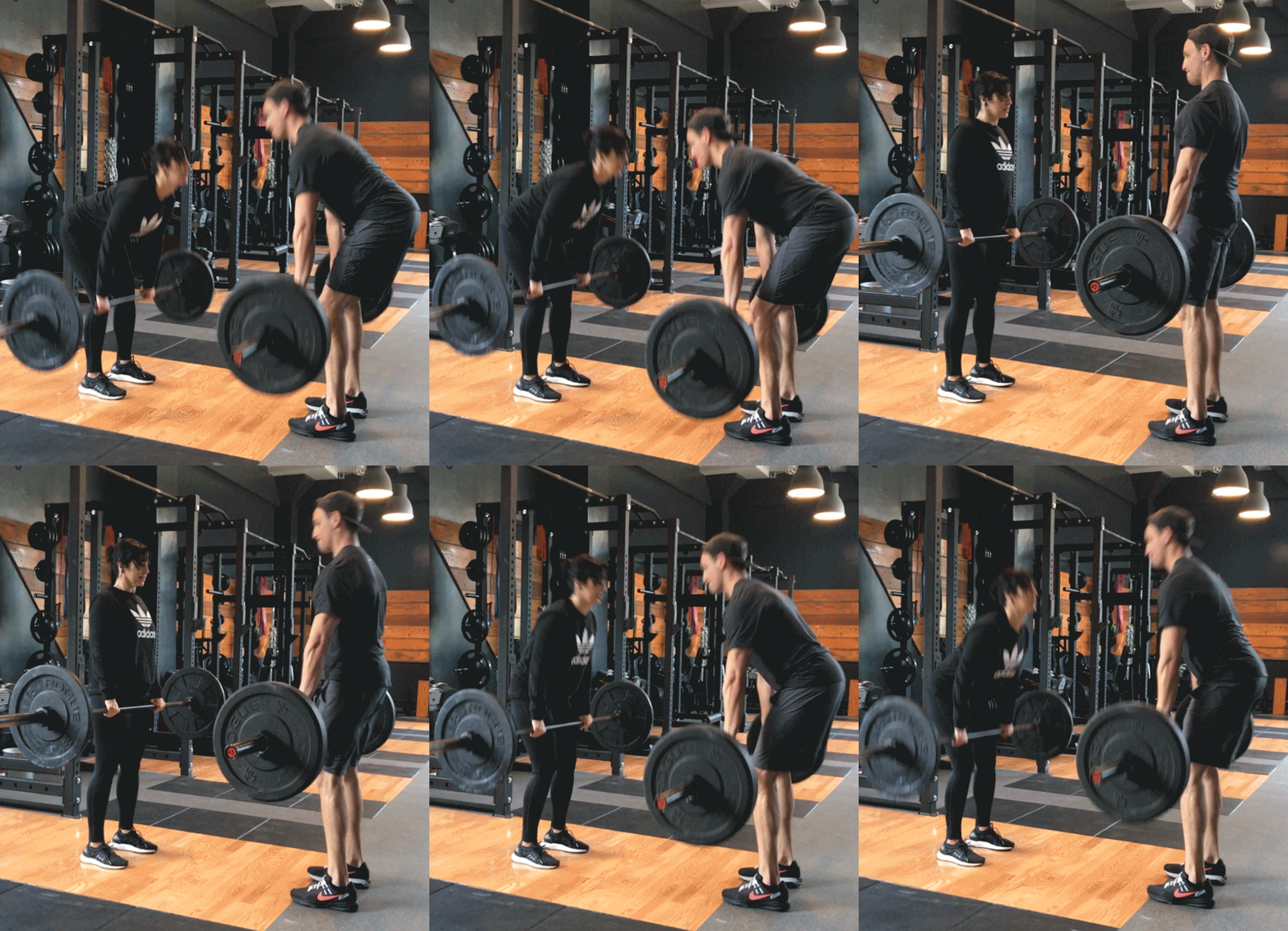
Double the deadlifts, double the fun (that's me on the left and Austin, my trainer, on the right).
The kicker here is that lifting heavy has changed my body in a way that I never could have anticipated. I have lost more weight over these last three months than I have in the last few years. I am stronger and faster in just about every other workout in my life. And most recently, during a beach vacation, my partner commented on my butt. It was higher! Perkier! Lifted! Rounded! I went into heavy lifting with the very wrong idea that it would add bulk, yet here I am feeling my absolute best and more confident than I have in a long time. Even more importantly is the understanding that this confidence had less to do with how I look and everything to do with how I feel.
The thrill of doing something new mixed with a real sense of accomplishment has given me an exercise high that I have not felt in a very long time. Instead of being terrified of a barbell, I now give my trainer grief when we aren't lifting. Through heavy lifting, I have come face to face with my physicality in a way that I never have before. There's also a real sense of pride that comes from learning what your body is capable of and seeing more weight being racked up on the bar. But more than anything, the inner confidence that I have built from this latest step in my fitness journey has continued to surprise me on an almost daily basis.

After Years of Exercising, This Is the Workout That Changed My Body

Thursday, November 30, 2017

3 Ways to Lose Weight Without Starving and Working Out

3 Ways to Lose Weight Without Starving and Working Out

How we’d all love the excess inches on our waist to go away all by themselves... But wait! Don’t fret — it’s entirely possible!
Bright Side has found several alternative ways to lose those extra pounds without going to the gym or dieting like crazy.

Breathing

The main rule of breathing gymnastics is that you should breathe in and out not with your chest but with your stomach. A thin waist, ripped abs, strong abdominal muscles — everything’s possible if you do the whole set of breathing exercises.

Contrast shower

This method is quite simple and often accompanied by other procedures. When finishing a shower, make the water in turns icy cold and hot. Such a contrast shower will not only get rid of excess weight but also chase away such diseases as arrhythmia, obesity, vegetovascular dysfunction, primary hypertension, and cellulite. However, there are several contraindications as well.

Massage

The best types of massage to fight fat are cupping, water, honey, and pinching ones. They help fraction the fat deposits, improve blood circulation in the front of your abdomen, and normalize intestinal motility. You can perform these procedures both yourself at home and in special salons. They should be done systematically and by cycles.

Best Way to lose weight in legs